How to Lead A Wedding Rehearsal: A Wedding Officiant’s Step-by-Step Guide
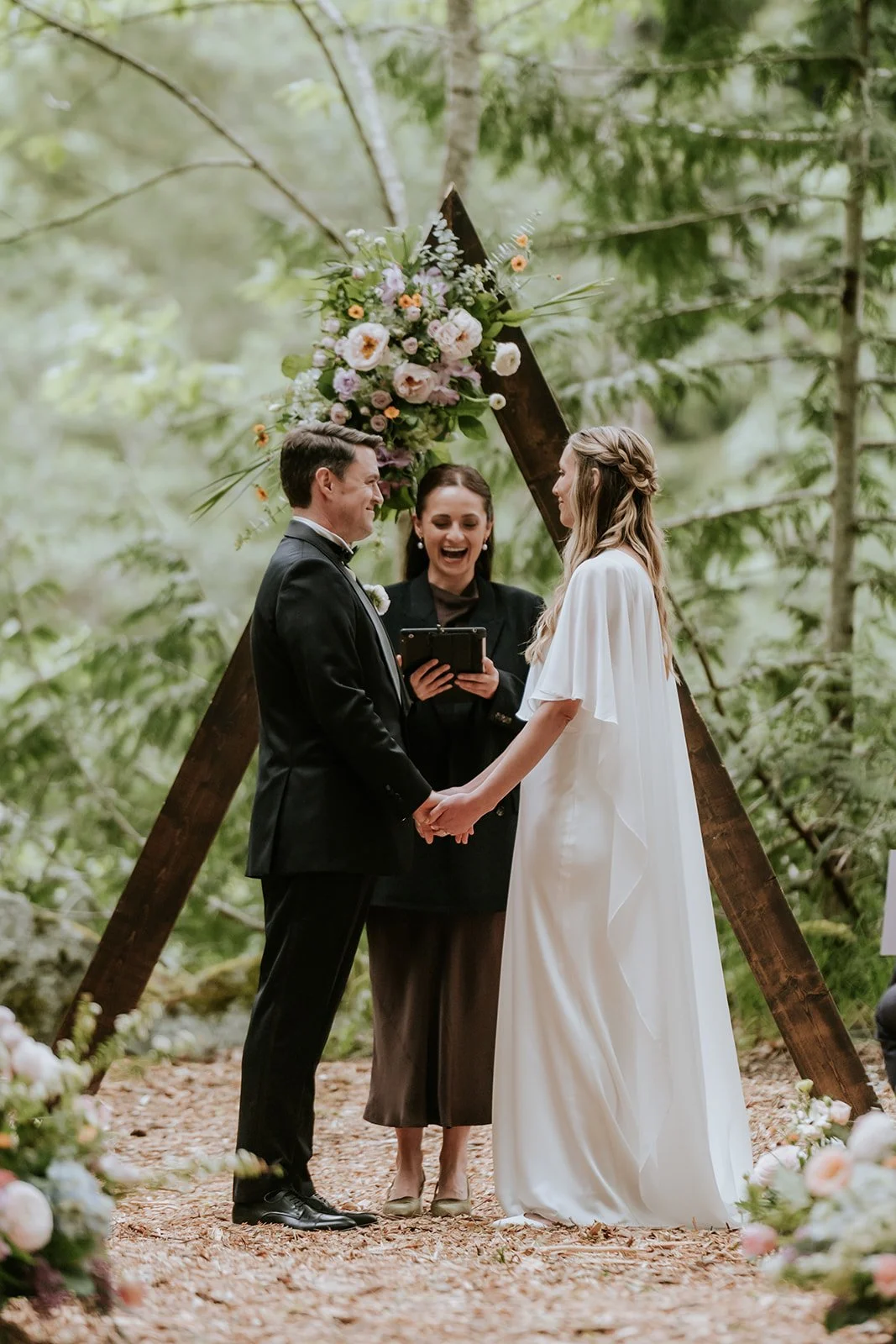
If you’ve been tasked with leading a wedding rehearsal and suddenly realized, wait... what exactly am I supposed to rehearse? you’re in the right place - I got you!
As a wedding officiant, I lead rehearsals regularly, but I’ve also had plenty of occasions where I’m writing the ceremony and taking care of the legal side without actually being there on the wedding day. Maybe the couple is having a destination wedding, or a friend is performing the ceremony.
I kept finding myself typing out the same rehearsal instructions again and again, so I figured it was time to put them all in one place :)
The biggest thing to know - it’s chill! It’s not a huge production. Your simply making sure everyone knows where to stand, how to get there, what happens next, and any little logistical details that would be annoying to discover five minutes before the ceremony.
Who leads the wedding rehearsal?
Usually, the rehearsal is led by one of three people: the wedding officiant, the wedding planner or coordinator, or a confident friend or family member who understands the ceremony plan.
When couples book me as their officiant, adding a rehearsal is optional. For smaller wedding parties or elopement-style ceremonies, we can often accomplish everything we need through a video call instead. That said, I do love a rehearsal! It gives everyone the chance to meet, ask last-minute questions, figure out the logistics, and generally remove some of the nerves before the wedding day.
A rehearsal can be particularly helpful if you have a larger wedding party, it’s a larger wedding, there are several people walking in / involved, if kids or pets are involved, if there are intricate elements (like a reading, or ritual), if you have specific cultural or ceremonial elements to coordinate, etc.
Photo by Emily Serrell
What to bring to a wedding rehearsal?
Bring the ceremony script, the processional and recessional music (songs downloaded for offline use, just in case), a speaker, any ceremony items you actually need to test, and have the processional order handy.
And if you're using a new sound system instead of a professional DJ, bring it and test it. I once had a couple discover at their rehearsal that the closest power source was much further away than expected and they would need an extension cord. Much nicer discovering that the day before than approximately four minutes before somebody is supposed to walk down the aisle :)
Who should attend a wedding rehearsal?
Anyone who has an active role in the ceremony should ideally attend. That might include wedding party members, anyone walking down the aisle, parents or family members involved in the processional, ring bearers or flower people, ceremony readers, any friends involved in the ceremony (playing music), etc
Professional wedding vendors such as photographers and experienced DJs generally don't need to attend. They already know what they're doing!
If you're working with a wedding planner or coordinator, it can be useful to establish ahead of time who is leading the rehearsal so you don't end up with three people giving instructions at once.
Step-by-Step Guide:
1. Before You Begin
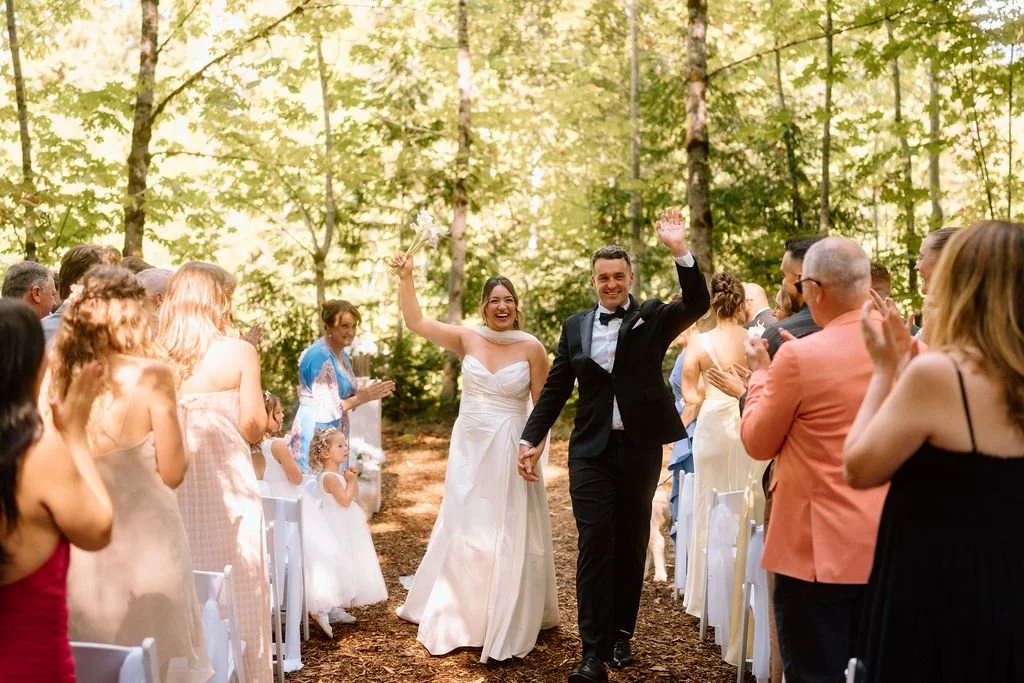
Before I arrive at a rehearsal, I've already talked to the couple about how they want their ceremony to feel. The ceremony is often the first major part of the wedding that guests experience, so it naturally sets the tone for what follows.
Your wedding party helps set that tone too! If my couple wants something upbeat and playful, I might tell their wedding party: Dance a little. Cheer. Throw your hands in the air. Bring your excitment into your walk!
If they're having something traditional and formal, we'll probably go with something a little more restrained. The important thing is that everyone understands the assignment!
I also like to remind everyone that while the wedding itself is obviously special, the rehearsal is part of the experience too. You'll only rehearse this particular wedding once in your life - Let’s have some fun with it!!
Photo by Maiya Chan
2. Start in the Middle
Slightly counterintuitive, I know… But instead of immediately sending everybody to the start of the aisle, begin by placing everyone where they'll eventually be standing during the ceremony. So, when they later practise walking down the aisle, everyone knows exactly where they're aiming for.
So, decide where the wedding party will stand - there are a few options:
Traditional positioning: Alex's wedding party stands behind Alex, while Sam's wedding party stands behind Sam.
Flip the wedding party: Alex's people stand behind Sam, and Sam's people stand behind Alex. If your favourite people are standing directly behind you, you can't see them during the ceremony. Putting them across from you, behind your partner, means you can actually make eye contact with them.
Seat the wedding party: Some couples want their wedding party involved in the processional but don't particularly want a crowd of people standing at the front for the entire ceremony. So, I usually have everyone walk in and stand at the front initially. Once the officiant says, “Please be seated,” the wedding party can take their seats too. Have some easy-access seats reserved for them.
Think about the front row as well
We often flip immediate family for exactly the same reason.
Instead of Sam's family sitting directly behind Sam, place them in the front row on Alex's side. Now both families can actually see their person instead of admiring the back of their head for 20 minutes!
POSITIONING:
Check where the sun will be - if you’re rehearsing at the same time as tomorrow’s ceremony, that’ll give you a good idea! Will one partner be blinded by the sun? Is the lighting even? If your photographers worked the venue before, they may have some insight for you.
Does everyone standing look somewhat symmetrical? Do you need to shuffle one side closer to the couple, or leave more space?
Tip for getting the couple in the center: hide a golf tee in the grass to mark center, or if you’re indoors, use tape to mark it.
3. Give everyone a few wedding-day tips
Once everybody is standing in their ceremony positions, it's the perfect time to cover a few practical details.
TIPS FOR THE WEDDING PARTY:
If you're holding a bouquet, hold it lower than you think. Around your belly button or navel is usually a good starting point, with the bouquet tilted slightly forward - this shows off more flowers and fewer stems in the photos (as we say in the industry…. “bush to bush”)
Ideally, take bouquets out of water around 20 minutes before the ceremony or have a towel ready to dry the stems.
If you're wearing a boutonniere, become a slightly awkward hugger, temporarily lol. I've seen many beautiful boutonnieres absolutely flattened before the ceremony has even started because someone has spent an hour enthusiastically hugging everyone. Go for the one-arm hug for a little while.
Decide what you're doing with your hands. If you aren't holding flowers, it can feel strangely difficult to work out what to do with your arms once you realize there are 100 people looking at you. Hands loosely together in front or behind your back both work. Having the wedding party look somewhat cohesive is generally nice!
If you have pockets - phones, wallets and giant ring boxes can create weird shapes in suit pockets that become surprisingly obvious in photographs. Give them to someone else before the ceremony if you can.
TIPS FOR THE COUPLE:
Stand closer together. Couples naturally leave a giant space between themselves because they think they're making room for the officiant. You don't need to! Get in there, stand close, hold hands, look at each other.
You do not need to look at your officiant the whole time. Normally, staring in the other direction while someone is talking to you would be considered a lil rude. Your wedding ceremony is the exception. If you stare at the officiant the entire time, your photographer gets 20 minutes of the backs of your heads. Hehe.
Angle slightly toward your guests. Rather than standing completely face-to-face, turning roughly 15 to 20 degrees outward gives your photographer and your guests a better view of your faces. You can still look directly at each other without presenting your shoulders to everybody.
You are allowed to act like yourselves. Your ceremony doesn't have to turn you into strangely formal versions of yourselves. Move your partner's hair out of their face. Laugh together, whisper something to them… If their vows make you want to hug them, hug them. I've seen so many couples look at me after their partner's vows with an expression that basically says, Am I allowed to kiss them? YES! It's your wedding. It’s just not your first ‘married’ kiss until you’re declared.
4. Practice the Processional
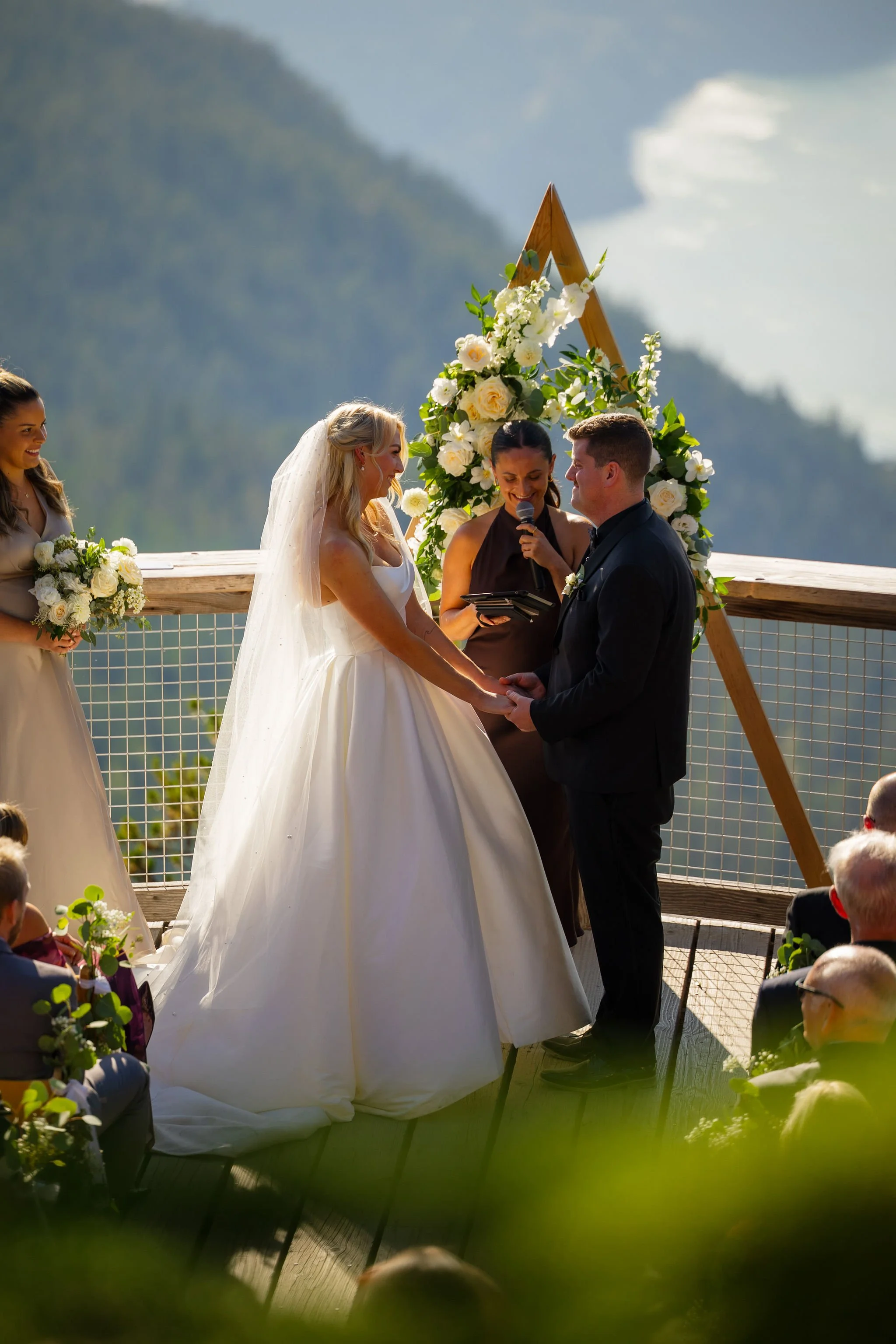
Now that everyone knows where they're ending up, send them back to the start, and get the processional to line up.
THE PROCESSIONAL ORDER
There is no rule saying one partner has to enter first - Traditional heterosexual weddings have historically had the groom waiting at the front while the bride enters last. You can absolutely do that - you can also completely ignore it!
I've had queer couples enter from opposite sides, meet at the top of the aisle, and walk in together. I've had one partner enter first and the other last. I've had couples walk in side by side. There are dozens of ways to arrange a processional, so do the one that feels like you.
START THE PROCESSIONAL
Remind everyone to walk slightly slower than normal - Think maybe 75% of your normal walking pace, depending on the music.
For the wedding party, you don't need to wait for the entire aisle to clear - the people walking in can generally “waterfall.” Once the person ahead is around halfway down the aisle, the next person begins. The exception is the couple’s entrance.
Press ‘play’ on the song, and practice the walk! You can do it as many times as you need, if you want to adjust pace, or try to time to a certain part in the song.
Interaction: Your wedding party doesn't have to walk down the aisle, silently take their position and stare straight ahead like they're entering military formation. I've had wedding party members high-five the partner waiting at the front, hug them, fist bump them or give them a kiss on the cheek. At one wedding, every single one of the groom's friends individually kissed him on the face on their way past. By the third person, everyone realized what was happening - it became one of the funniest moments of the ceremony.
Repeat the processional as many times as needed to ensure everyone feels great.
Photo by Kai Jacobson
5. Altar Moments
The ‘Escorts’ - If somebody is escorting a partner down the aisle, decide what happens when they reach the front. They might hug the person they've escorted, hug or shake hands with their partner, then take their seat.
Outfit adjustments - Assign someone to adjust the train, if somebody is wearing a dress, veil or cape with a train, choose one person to straighten it after they arrive. If that person is carrying flowers, they'll want to pass the bouquet back first so they have both hands free. Once the train is sorted, they can return to their position. And if the couple is holding bouquets, this is also a good moment to work out who takes them before the couple holds hands.
6. Walk through the ceremony body
You do not need to perform the entire ceremony at the rehearsal, word for word. Instead, explain the flow: Welcome, maybe a reading, the story, the vows, I do’s, rings, etc - Practise movements and transitions, not every word.
If somebody is doing a reading, make sure they know when they're being invited forward and where they'll stand. If the rings are being passed from someone in the wedding party, establish how that's happening too. (And tell them to take the ring box back to their seat with them, not put it in the couple’s hands then walk away)
The officiant can also identify key moments to walk out of the way. Don’t just get out of the way for the kiss! I move out of the way for the processional, personal vows, the ring exchange, and the kiss.
7. Practice the Recessional
Practise the exit order to the music. The couple heads down the aisle first - they can also stop for another kiss, dip, high five, dramatic celebration, whatever feels right! Once they've fully cleared the aisle, the wedding party can waterfall out behind them. Then you're ALMOST done!
8. Test equipment
If you’re using a new sound system, test it out the day before. Two things I’ve run into before - once, the power source was really far away from the ceremony site, so we needed an extension cord. Luckily, figuring that out the day before meant we could get it well and truly in time.
The second thing was at a site near a fire station - our bluetooth system just wouldn’t work! Once we drove down the road, it would work, it just seemed to have the signal blocked near the station. Testing it the day before meant we had time to source a system that didn’t use bluetooth.
Microphone tip: Most peoples instinct is to hold the microphone several inches away from their mouth, but it doesn’t actually pick up the sound well…. Watch this video on how to hold the mic.

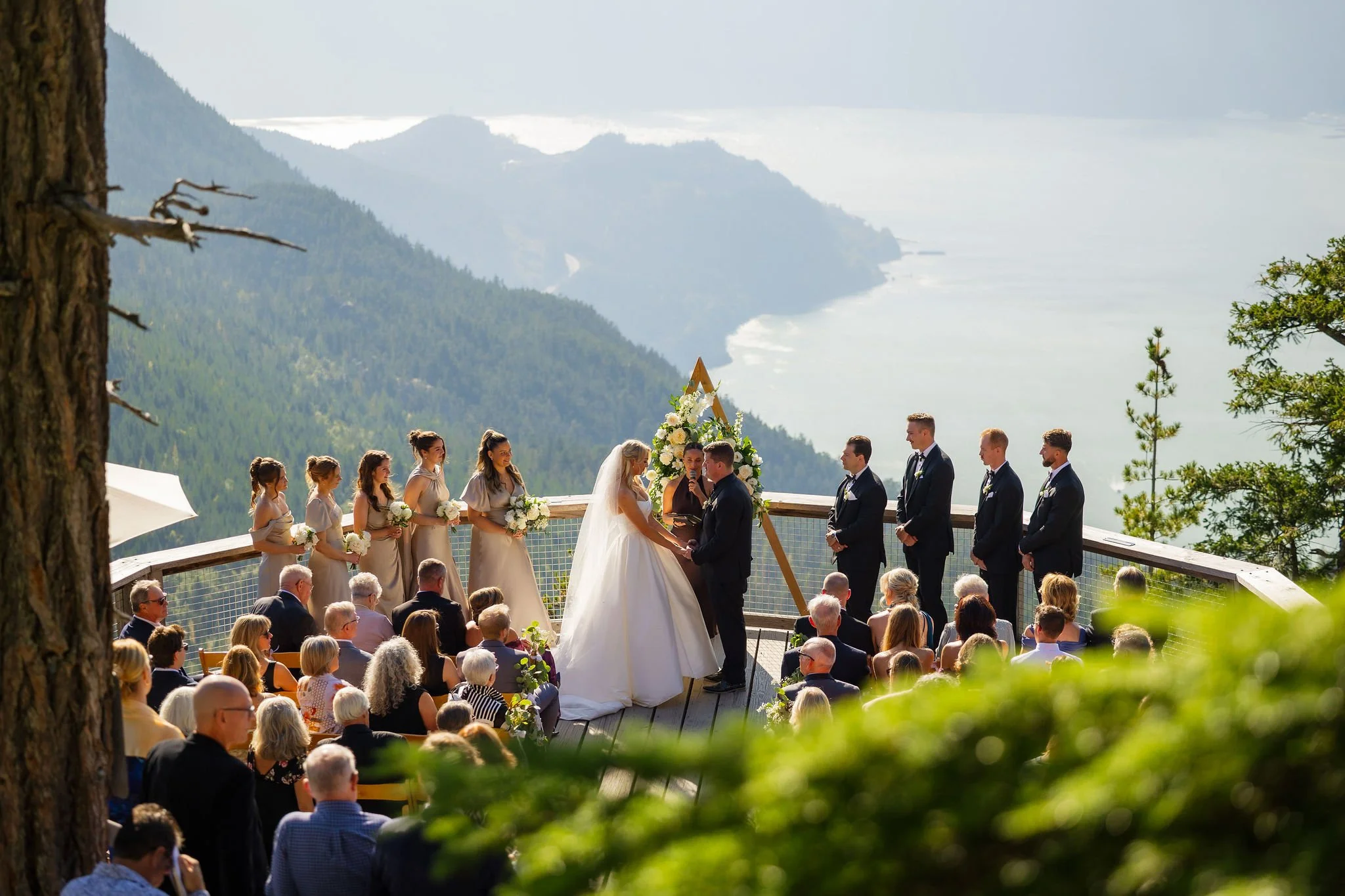
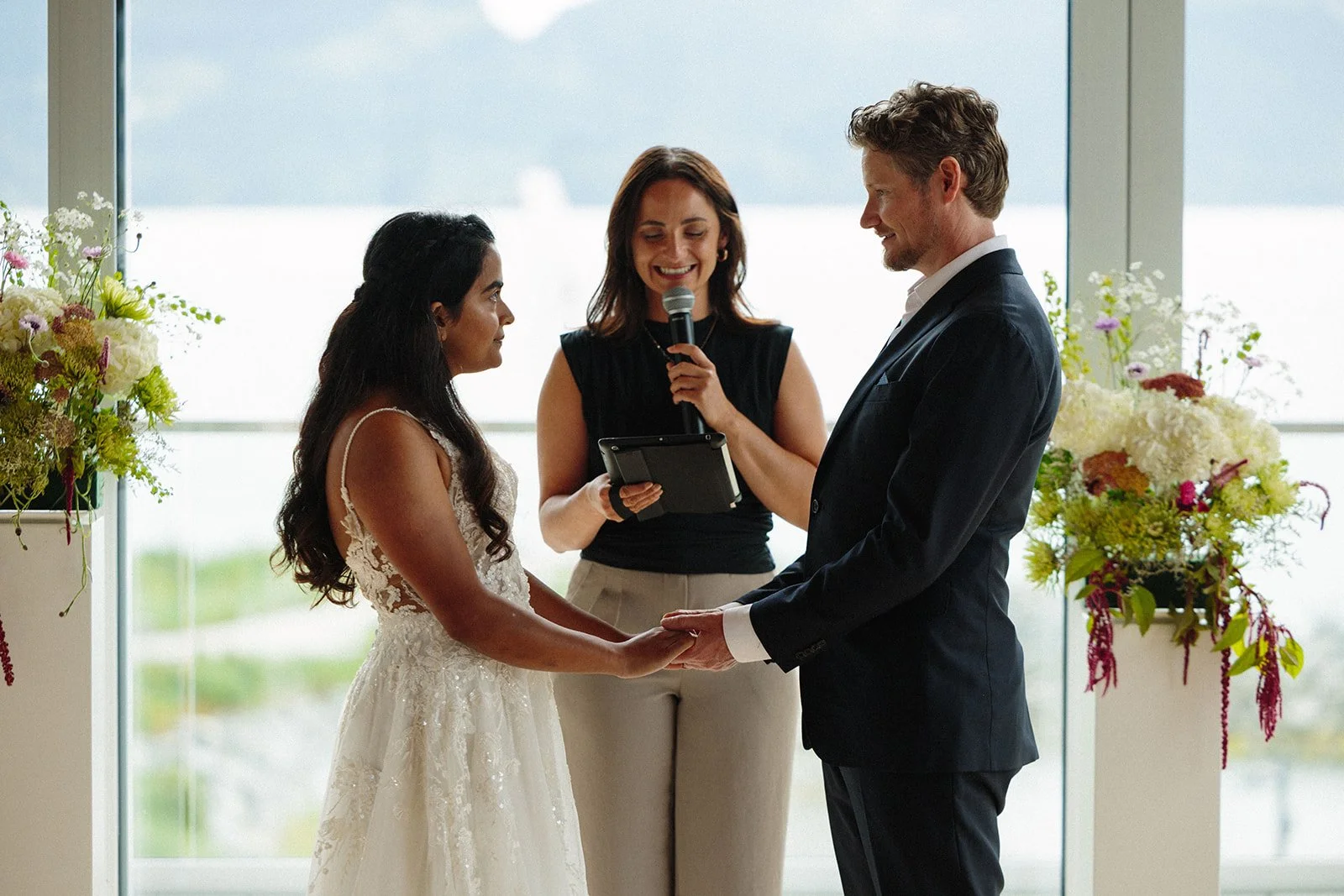
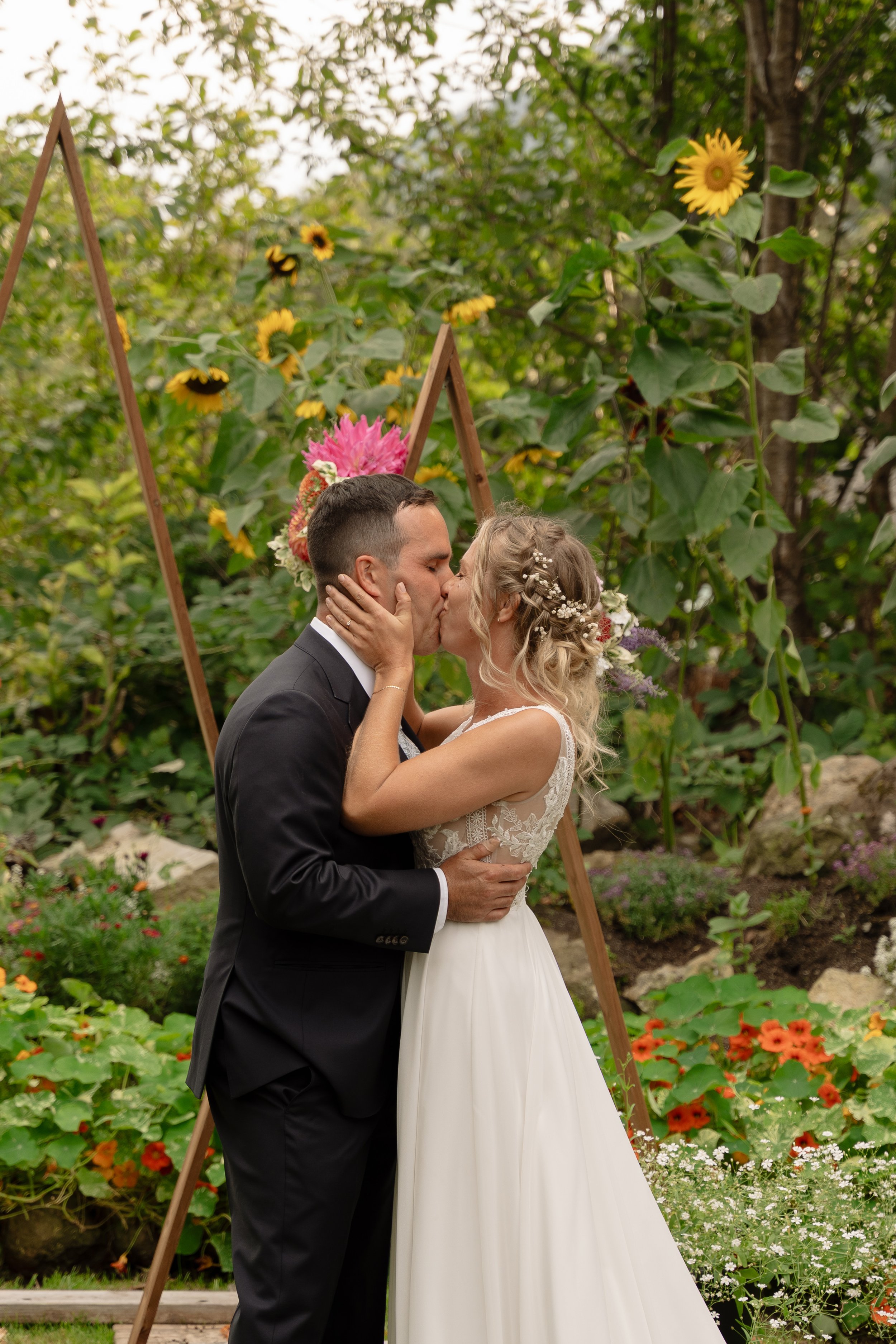
Photos by Leah Kathryn, Kai Jacobson, Oisin McHugh Weddings, and Gabriela Le
Other things to think about:
Kids - Tell children generally where they're going and who they're walking toward, then let them be children. Their job is to be cute, and they’ll nail that - everything else a bonus.
Have a weather plan - If you're outside, know what would actually trigger a move to Plan B. A weather plan is much easier to execute when everybody knows it exists before rain begins falling sideways.
Work out what happens immediately after the ceremony - Where are the couple going? Is there a group photo? Are guests heading to cocktail hour? Does the couple need to sign legal paperwork? Having the first five minutes after the recessional figured out prevents everyone from wandering around looking confused.
-
For most weddings, around 30 to 45 minutes is plenty.
Very simple ceremonies may need even less.
Larger wedding parties, complicated processionals, ceremony rituals, children, multiple readings or unfamiliar venues may need closer to an hour.
-
Not always! Smaller weddings and simple ceremonies often don't need an in-person rehearsal at all.
A planning call can be perfectly adequate.
Rehearsals become more useful as the number of moving parts increases. -
The day before is common, but it isn't mandatory.
Whenever the important people are available and you can access the ceremony location works.
For some weddings, that might be two days before.
For others, we rehearse virtually.
About the Author
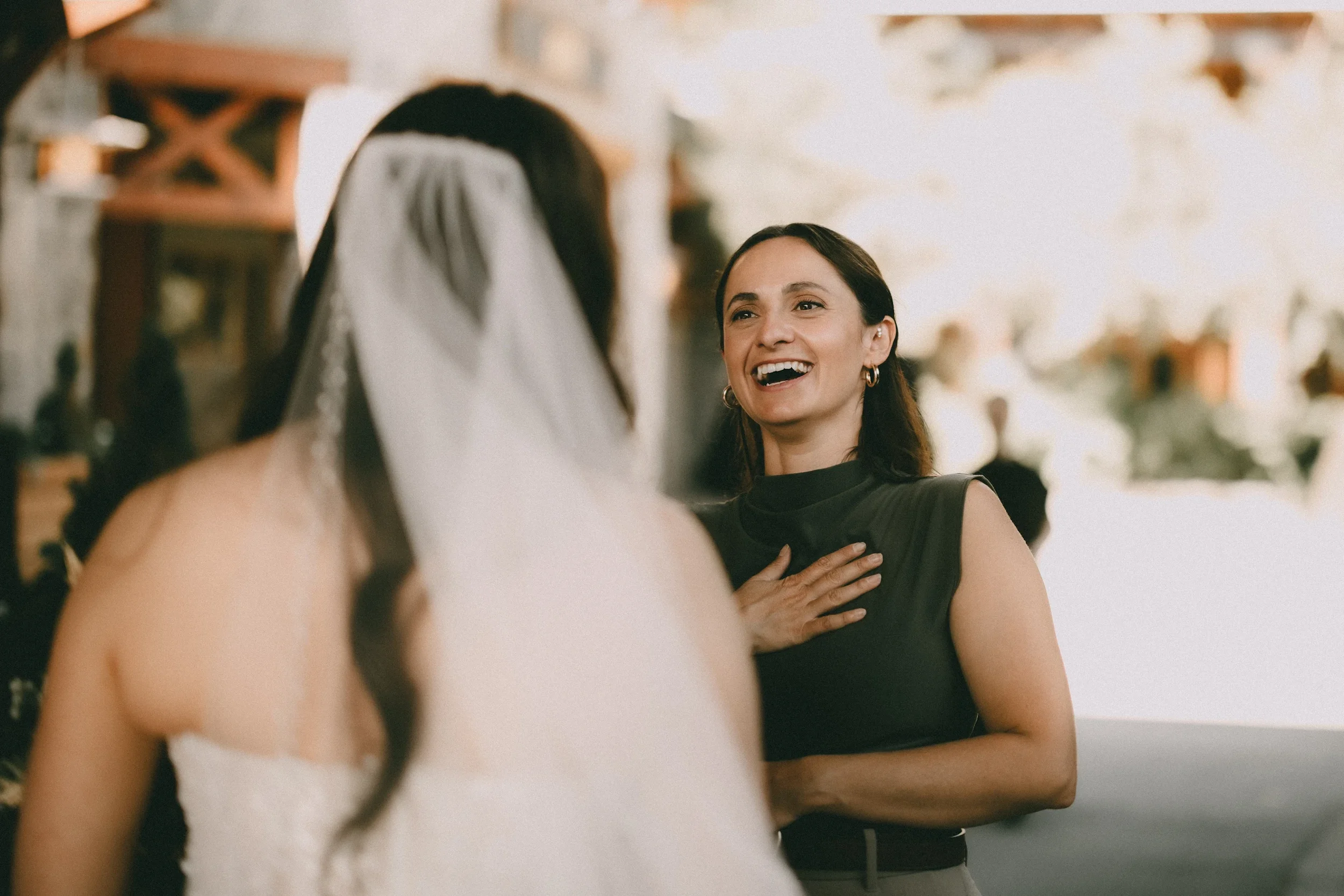
Jude Douglass is a wedding officiant and elopement planner based in Squamish, British Columbia, serving couples throughout Squamish, Whistler and the Sea to Sky.
Through Sea to Sky Officiant and ELOPE Squamish, Jude performs more than 100 weddings a year, from intimate legal ceremonies and traditional weddings to helicopter, hiking, gondola and sailboat elopements.
Her approach to wedding ceremonies is modern, inclusive and relaxed, with a focus on helping couples create something that actually feels like them rather than following traditions.
Photo by Amanda Coldicutt